
By now, you’ve already seen every headline: AI has changed search as we knew it. Traditional platforms’ market share is reducing. Keywords are taking the back seat. Zero-click is the new reality.
While some of them might be noise, most of them are right. AI search now holds a significant portion of daily queries, with tech evolving fast to align with user behavior.
Within that shift, one surface in particular is moving fastest: conversational AI. These are AI-powered interfaces that let users interact through natural language, getting answers, recommendations, and actions in real time, rather than typing keywords into a search bar.
Major AI chat platforms started running ads in late 2025 and early 2026. What was once only a theory is now evolving into a fully functioning advertising engine. It holds formats, pricing models, and significant budgets, opening up a whole new channel for advertisers.
What’s fuelling the monetization boom for conversational AI?
A massive, high-intent audience.
For instance, OpenAI’s ChatGPT crossed 1 billion global MAUs in May 2026. Microsoft CoPilot hit 420 million global MAUs in Q1 of 2026 as well. (Reuters, Microsoft)
Furthermore, usage data from Pew Research Centre and McKinsey surveys tells the story clearly.
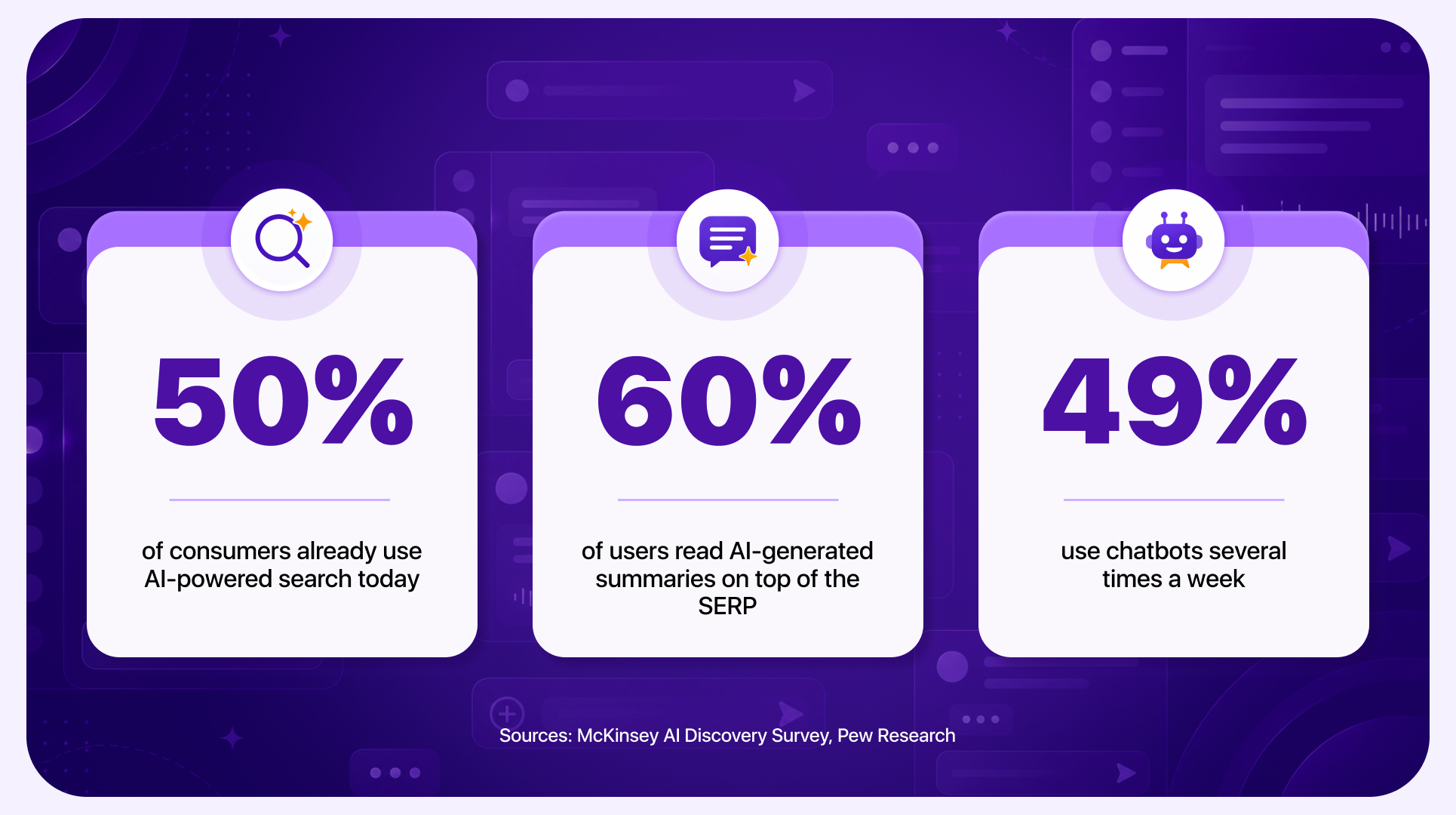
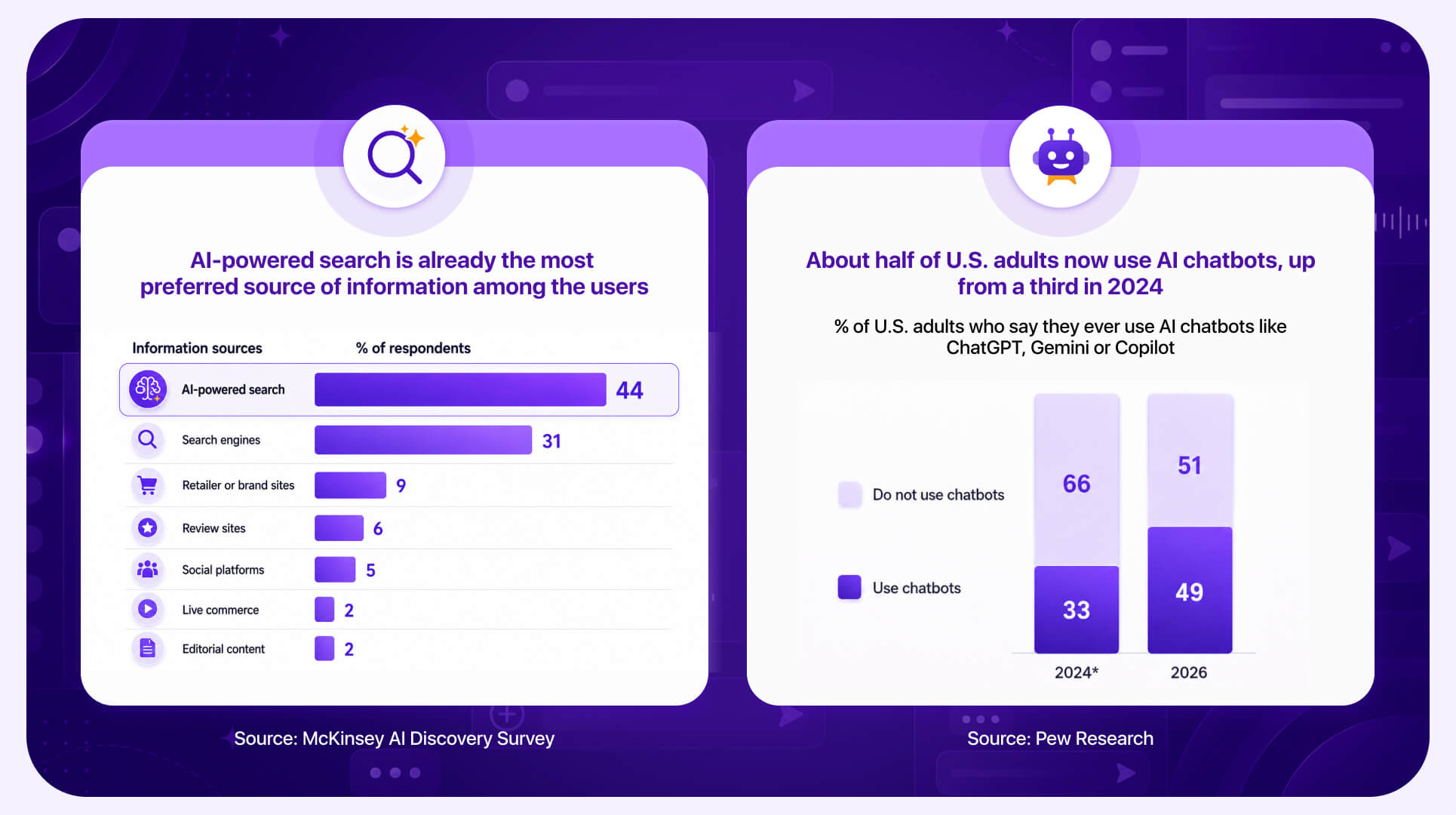
When you look at all of this together, one thing becomes clear: this isn’t casual browsing; it’s the kind of mid-decision audience that advertisers have always wanted.
How ad formats and placements look inside conversational AI interfaces
User experience is the most important thing for any publisher, and even more so when you’re dealing with chat interfaces built for non-intrusive conversations.
That’s why, the most common unit is a clearly labelled “Sponsored” card that appears above or below the AI’s answer; not inside it. It typically includes a headline, short description, image, and a destination link.
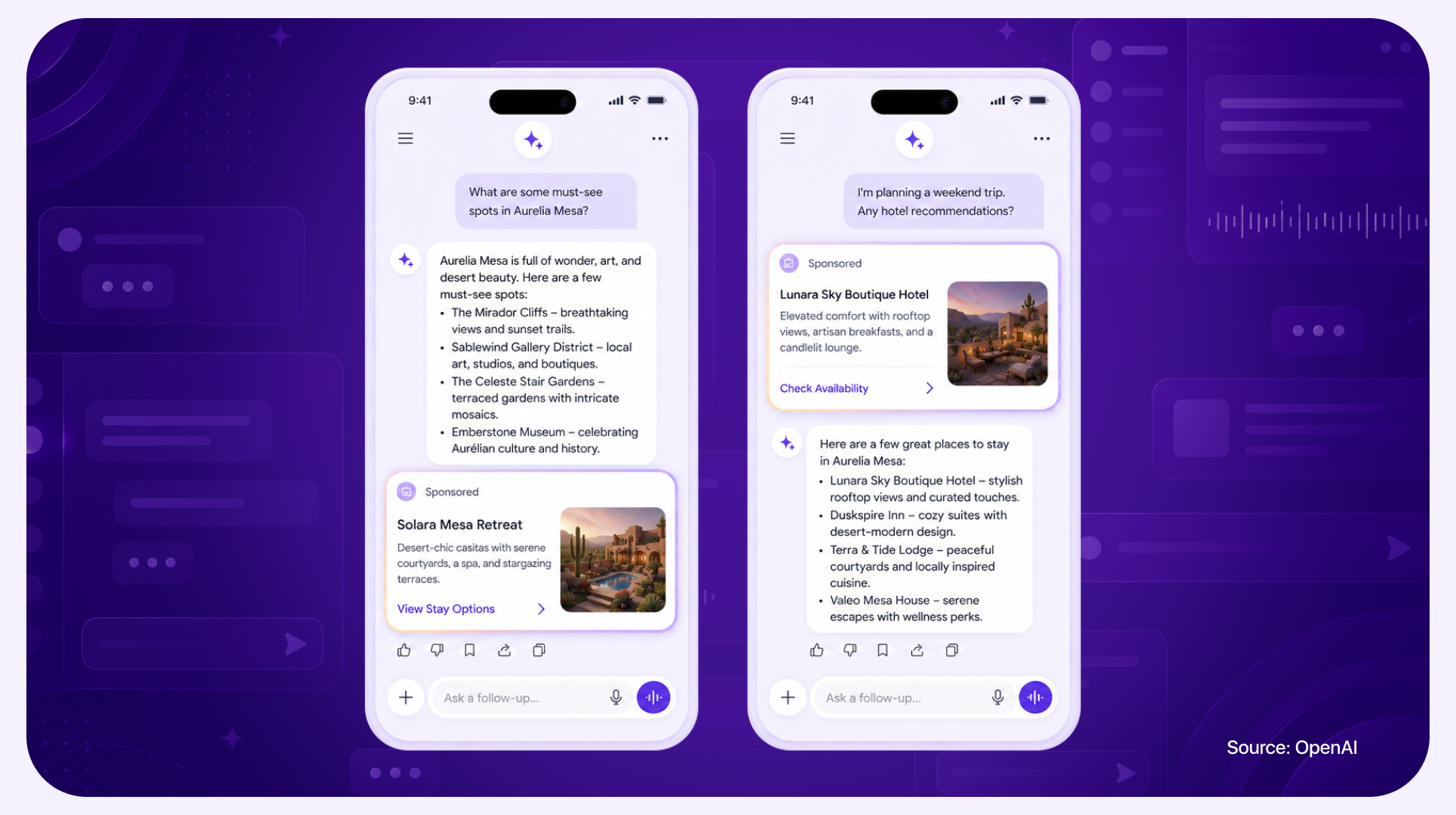
Beyond the basic card, formats are evolving quickly, like product carousels with pricing and availability data that let users act without leaving the conversation.
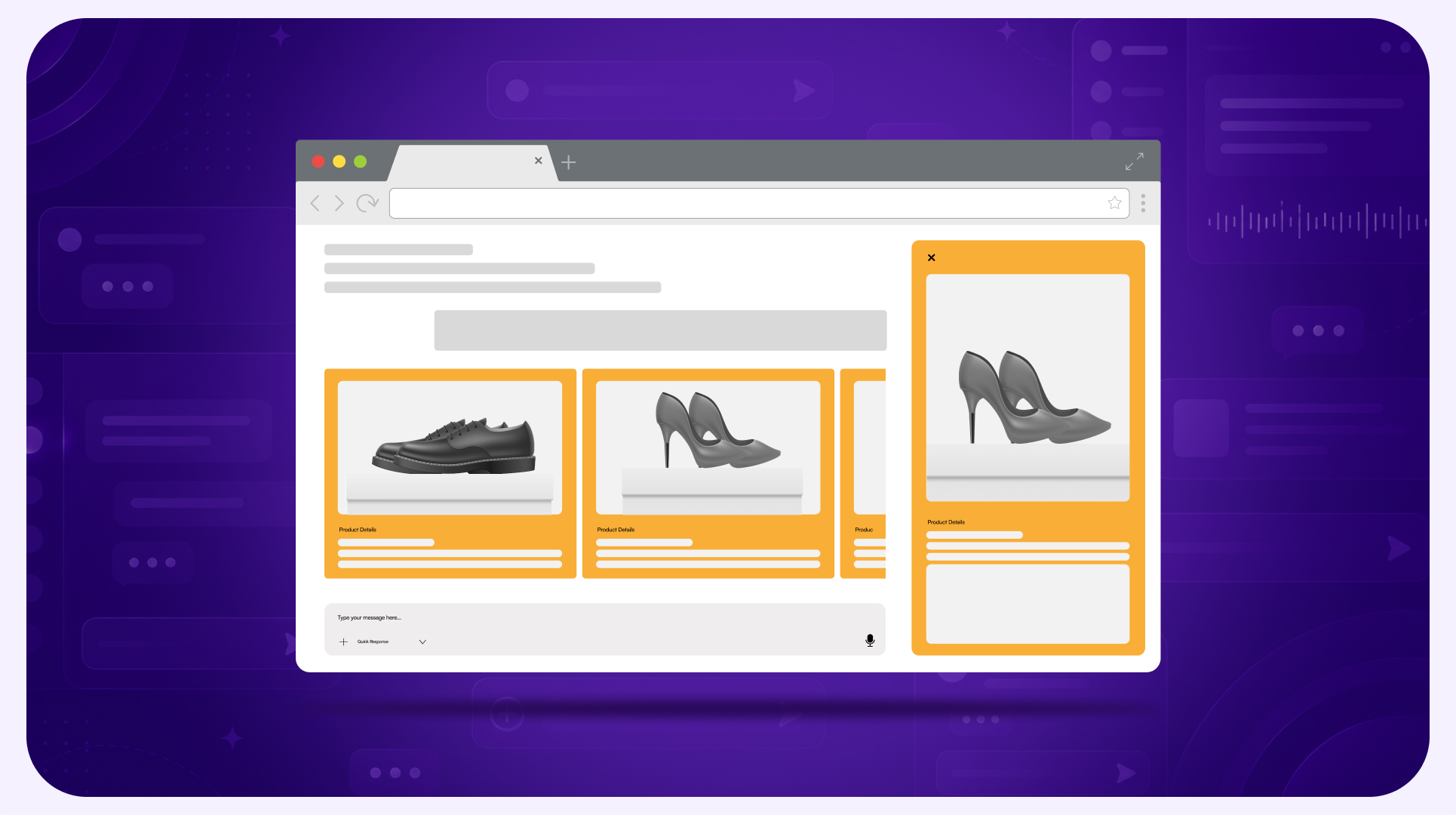
On the more experimental end are ad units that function as interactive chat agents. They let the user ask follow-up questions directly about the product or brand before clicking through, turning an ad impression into a two-way conversation.
The consistent design logic across all of them is answer first, ad second, and always labelled.
Moreover, the ad-serving system runs independently from the model generating the answer. For instance, OpenAI has stated explicitly that advertisers cannot pay to influence what the AI recommends, a principle they call “Answer Independence.”
What’s worth watching in the near future is whether this hard wall holds as ad revenue becomes more central to these platforms’ business models.
What’s in it for Advertisers
In traditional paid search, you bid on keywords — a whole ecosystem built around a 3–4-word query. In conversational AI, the query is replaced by a conversation, and the system matches your ad to the meaning and intent of that exchange.
That’s a fundamentally different ecosystem which works in advertisers’ favour through:
- Richer intent signals: Longer, more specific prompts mean you know more about the user before they ever see your ad.
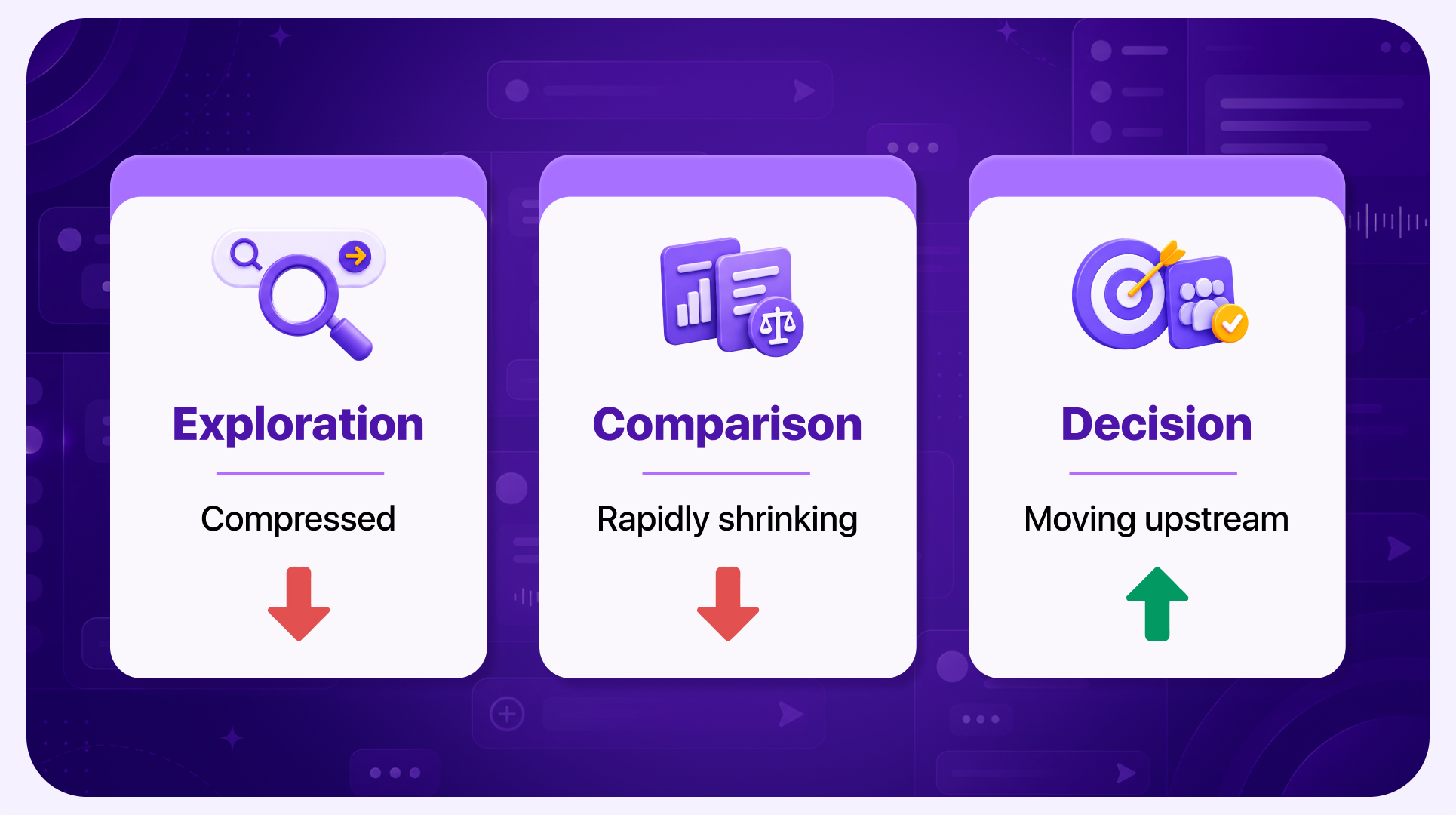
- A compressed funnel: Because the AI has already answered the user’s research questions, the gap between “seeing an ad” and “being ready to buy” is smaller than it’s ever been in digital advertising.
- Newer formats: Advertisers now have more surface area to experiment with formats that didn’t exist in traditional paid search and are built for dialogue.
The Consumer Lens
The compressed funnel that benefits advertisers also benefits users. Less clicking around, less comparison tabs, and fewer irrelevant results to filter through. If the ad is relevant, it’s useful.
User Trust Caveat
Yes, AI adoption is growing. But scepticism is growing right alongside it.
63% of US adults say ads in AI search results would make them trust those results less, according to Ipsos’ 2026 survey. The concern isn’t irrational. AI assistants earned user trust by promising zero agenda; just the best answer. The moment that perception cracks, the value of the whole experience erodes with it.
To navigate this, platforms running ads are taking a different approach. The mechanisms they’re building (structural separation between ad systems and answer-generation, mandatory labelling, hard exclusions around sensitive topics, ad-free tiers for paying subscribers) aren’t just user experience decisions. They’re bets on what will win long-term.
So, is conversational AI an important channel to tap into?
Yes, not as a complete replacement, but as an expansion of current search surfaces.
Traditional search is still around. But the search bar or the SERP is no longer the only place a user searches. That behaviour has extended into AI interfaces where your current campaigns have no reach.
The key to success is staying ahead as platforms evolve, which means building for what comes next, not just what’s there right now. Here’s how you can do that:
- Establish brand presence early while formats are still maturing and CPCs haven’t skyrocketed. High intent and low competition are a temporary window.
- Pick surfaces by trust signal, not just reach. 42% of users said Copilot search ads had a positive impact on their experience, per Microsoft research; a signal that the ad isn’t ruining the experience. That’s the metric to watch across platforms; whether users welcome the ad or resent it.
- Leverage specialized ad-tech enablers to bypass complex engineering and gain entry before competitors.
At SitePlug, we work with paid search advertisers to navigate AI-led search surfaces. Get in touch to talk through what this means for your campaigns.