In the late 1990s and early 2000s, the internet exploded.
Pages multiplied faster than anyone could keep up with. Finding anything useful started to feel like searching for a needle in a very large, very chaotic haystack.
That’s when the Search Engine Results Page aka the SERP became the internet’s traffic cop (pun intended, of course).
It turned open-ended curiosity into ranked answers and gave users a single place to start. Brands competed for visibility through formats, placements, and keywords, while users did the work of comparing options and deciding what to do next. This, i.e. the traditional model, aligned with how people behaved, but it relied on one assumption: that humans would always be willing to do the heavy lifting.
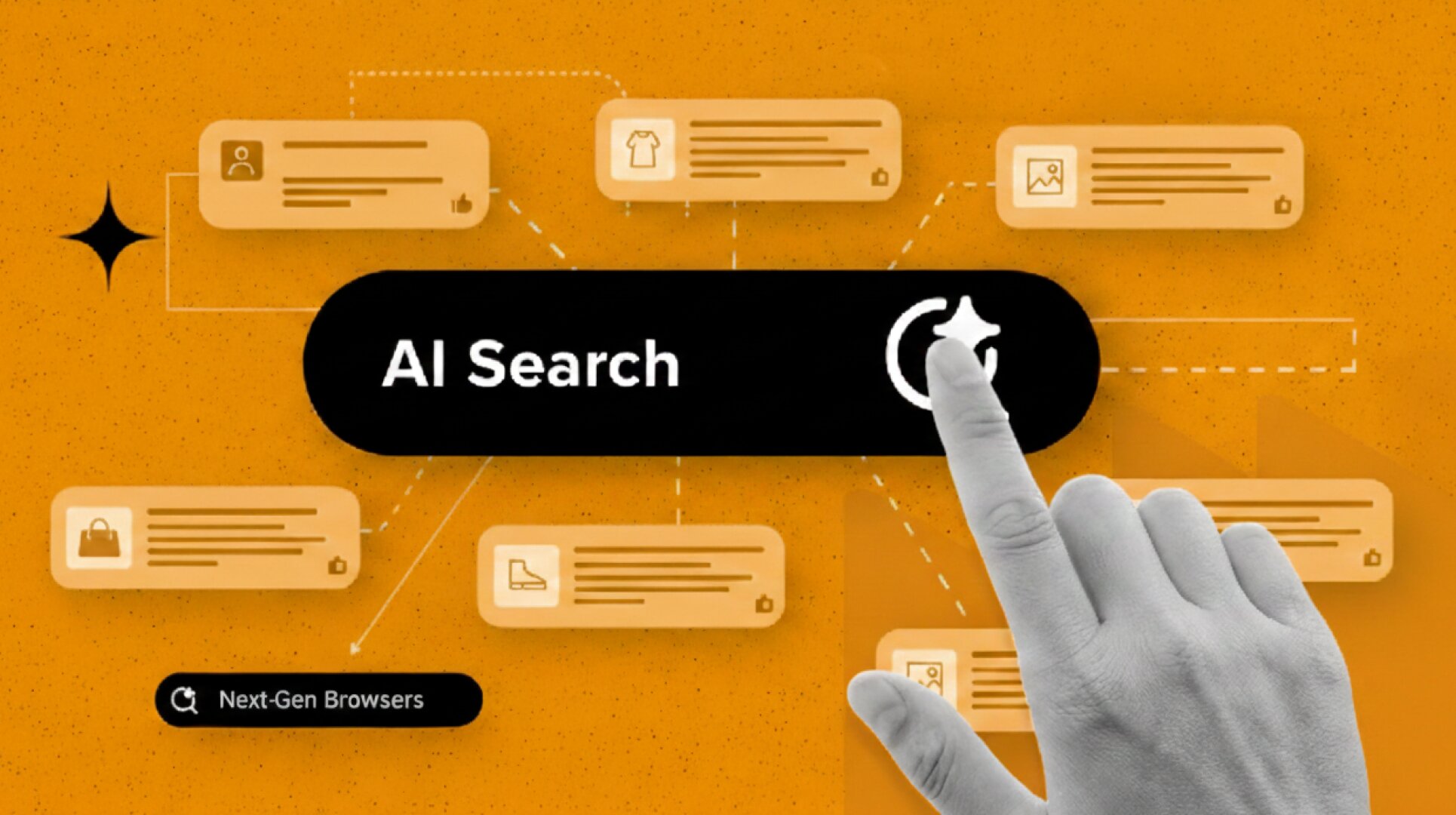
With Artificial Intelligence entering the chat, that assumption is now breaking. AI is reshaping how user intent is expressed, interpreted, and acted upon. It is changing the mechanics of discovery, and that, in turn, changes where, when, and how brands show up.
Breaking Away from the Old Search Playbook
The most noticeable changes in search today are speed and convenience.
User journeys are shorter, clicks are fewer, and decisions happen faster. It’s easy to chalk this up to shrinking attention spans or impatience, but that explanation doesn’t go far enough.
What’s really changing is willingness.
We’ve all become increasingly comfortable letting systems do the thinking for us. We’re delegating judgment, and once you notice that, the rest of the shift starts to make sense.
This isn’t new behavior. It’s already how we choose what to watch, what to listen to, and what to read. Roughly 75–80% of what people watch on Netflix is surfaced through algorithmic recommendations, not manual browsing (Source: EMARKETER). People didn’t stop caring about content. They stopped wanting to sift through endless options.
Search is following the same path, where everything fits into an algorithmic mold.
Traditional vs. AI-led Search
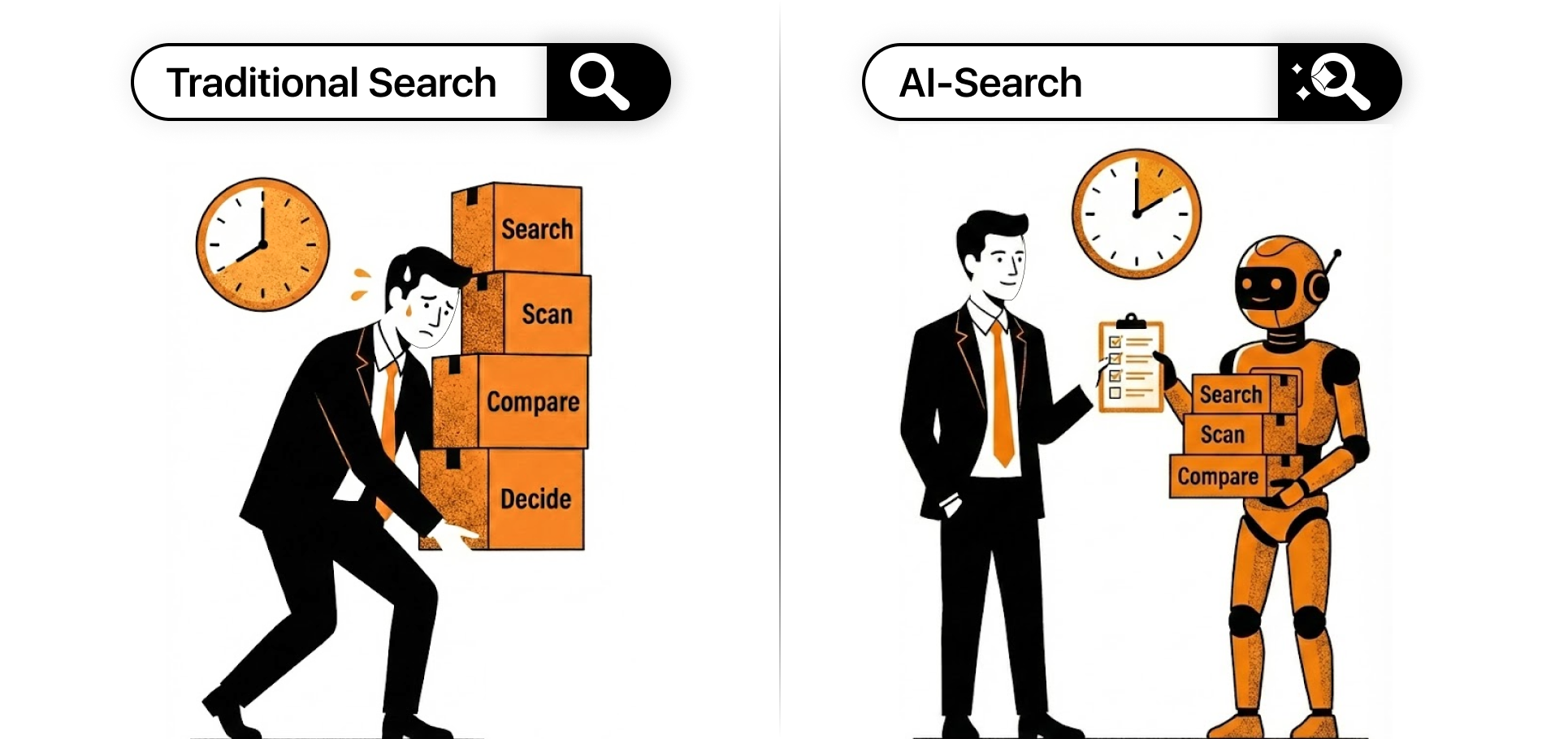
For years, traditional search asked users to do the work:
search → scan → compare → decide
AI-led search collapses that effort:
ask → shortlist → act
Instead of presenting options neutrally, AI systems summarize, prioritize, and recommend. The user still decides, but the system helps define it. A whopping 47% quicker.
AI search ad spend is growing at a significantly steeper rate than any other major channel like Retail Media or Traditional Search, with a projected four-year CAGR of 123.5%. (Source: EMARKETER)
AI Advertising Forecast
Let’s take a closer look at this new era of search.
From Keywords to Decisions: How AI is Rewiring Search
#1: Search is becoming predictive, not reactive.
Traditional search waited for users to be explicit. AI doesn’t.
Today’s systems infer intent from context, history, and signals that exist before a query is fully formed. Search is moving upstream, from reacting to questions to anticipating needs.
That’s why 60% of searches now end without a click, and why 80% of consumers rely on AI-generated summaries for a meaningful share of their searches. (Source: Similarweb)
Zero-click behavior isn’t a sign that search is weakening; it’s a sign that exploration is being replaced by prediction.
#2: Answers, not rankings, are taking over consumer journeys.
As AI takes on more of the grunt work of filtering and prioritizing information, results pages are being restructured around synthesized responses rather than lists alone.
AI overviews, summaries, and conversational layers now sit on top of traditional results, compressing what used to be multiple steps into a more guided experience.
This shift is also changing where consumers turn for guidance. 42% now ask generative AI for shopping recommendations and decision support (Source: Bain & Company), signalling a move away from browsing long lists toward receiving curated shortlists. When answers take precedence over exploration, intent matures faster.
#3: AI-led search paths are significantly boosting conversion rates.
As AI shapes decisions earlier, paid visibility is no longer confined to the moment someone types a query.
Consider how this plays out in practice. for example, when a user opens a browser and sees retargeted tiles for products they’ve previously explored. These placements work because the system already understands interest, making the interaction closer to decision than discovery.
A user asks an AI assistant to recommend laptops within a certain budget. The system narrows the field, explains trade-offs, and highlights what matters. Later, the user opens a browser and sees retargeted tiles for products they’ve previously explored.
The system is reinforcing a decision that’s already forming.
That timing is what drives performance. When paid placements appear after AI has filtered options or even during, users move closer to checkout, not comparison. The result is 3–5X higher conversion rates, with average AI-led conversion rates around 4.2% versus 2.8% from traditional organic search. (Source: Superprompt)
The Consumer Behavior Shift
Search Goes Zero-Click
Searches now end with zero-clicks
Reliance Rate
Consumers now rely on AI summaries for ≥40% of searches.
Source: SimilarWeb
AI-Driven Advisor
Consumers ask Gen AI for recommendations
Traffic Surge
Increase in traffic to retailers from GenAI sources.
Source: Bain & Company
AI-Led Conversion
Higher conversion from AI-led search
Avg. Conv.
AI Search vs. Google's 2.8% industry standard.
Source: Superprompt
What Early AI Visibility Is Already Doing for Top Brands
Data from Similarweb shows AI interfaces acting as real discovery and referral layers:
- Walmart now sees ChatGPT among its top traffic sources, driving ~17.8M visits with a 25% engagement lift (Source: Similarweb)
- Macy’s records an 81% increase in engagement from ChatGPT-driven traffic (Source: Similarweb)
Volume isn’t the only thing that stands out though; it’s behavior:
- Users are reaching brands after AI has already framed options and narrowed choices
- Engagement is higher because context and expectations are set upstream
- Brands that show up in AI conversations are influencing the shortlist, not just capturing clicks
This doesn’t mean search is going away. But it does mean the old mental model no longer holds.
Search is no longer one platform, one moment, or one pathway. It’s becoming a distributed, AI-mediated system.
The brands seeing momentum aren’t necessarily doing something radical. They’re simply present where decisions are being shaped, not just where they’re being completed.
With this, we usher in the new era of search. One that is smarter, quicker, and more intuitive with every query.